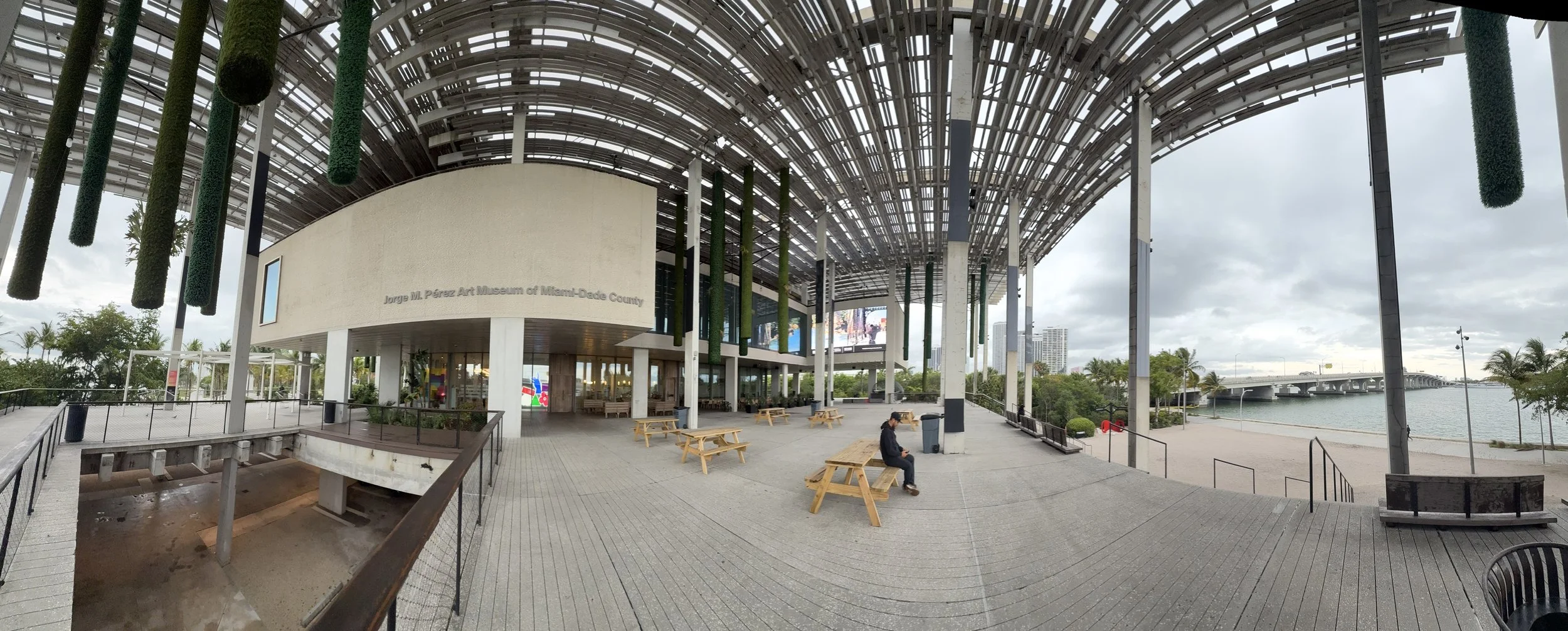
Peréz Art Museum Miami
1103 Biscayne Blvd, Miami, FL 33132
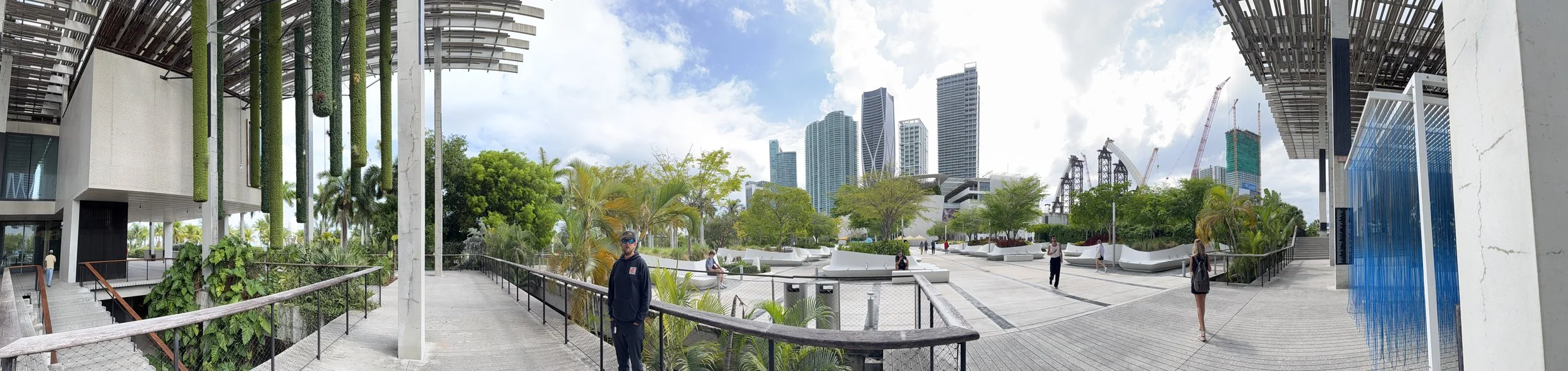
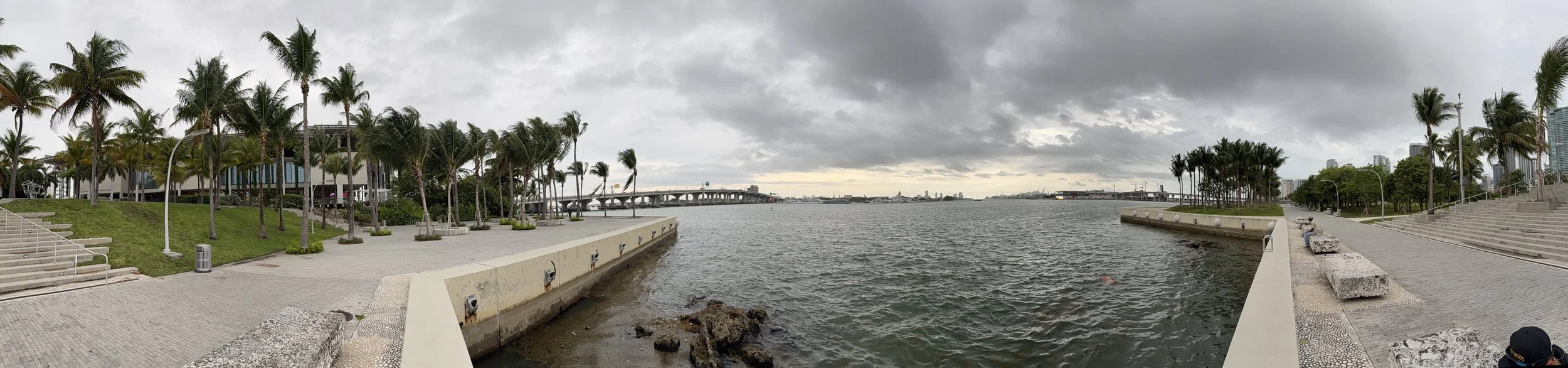
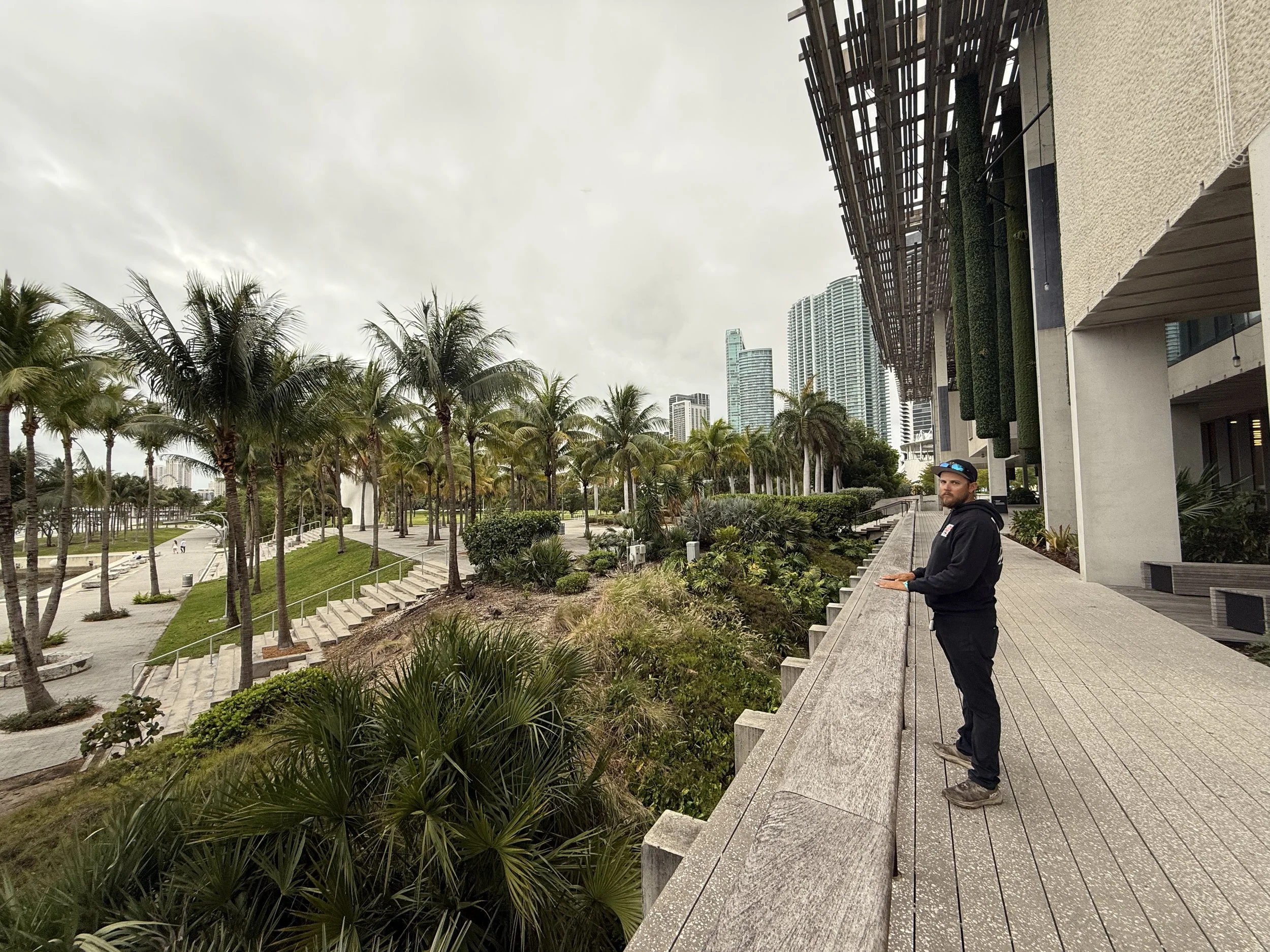
Location: The Pérez Art Museum is easily accessible and conveniently located near the intersection of Biscayne Boulevard, 836 Dolphin Expressway, and I-395 MacArthur Causeway. It is minutes away from Wynwood and downtown neighborhoods. The PAMM and the Frost Science Museum are located in Museum Park, close to the Adrienne Arsht Center. Museum Park abuts the Maurice A. Ferré Park and Biscayne Bay waterfront. The Maurice A. Ferré Park features the longest waterfront promenade and stretches from Biscayne Boulevard to Biscayne Bay. Even with its central location, navigating to the PAMM is difficult due to ongoing construction in the immediate areas and long traffic light cycles.
Date Visited: 12 May 2025
History
The Peréz Art Museum Miami was founded in 1984 and “dedicated to international art of the 20th and 21st centuries.” The PAMM “evolved from the Miami Art Museum (MAM), which grew out of the Center for the Fine Arts (CFA).” The CFA partnered with Miami-Dade County. In 1994, the institution began collecting art work to provide the foundation for a permanent collection, rather than solely hosting temporary exhibitions.
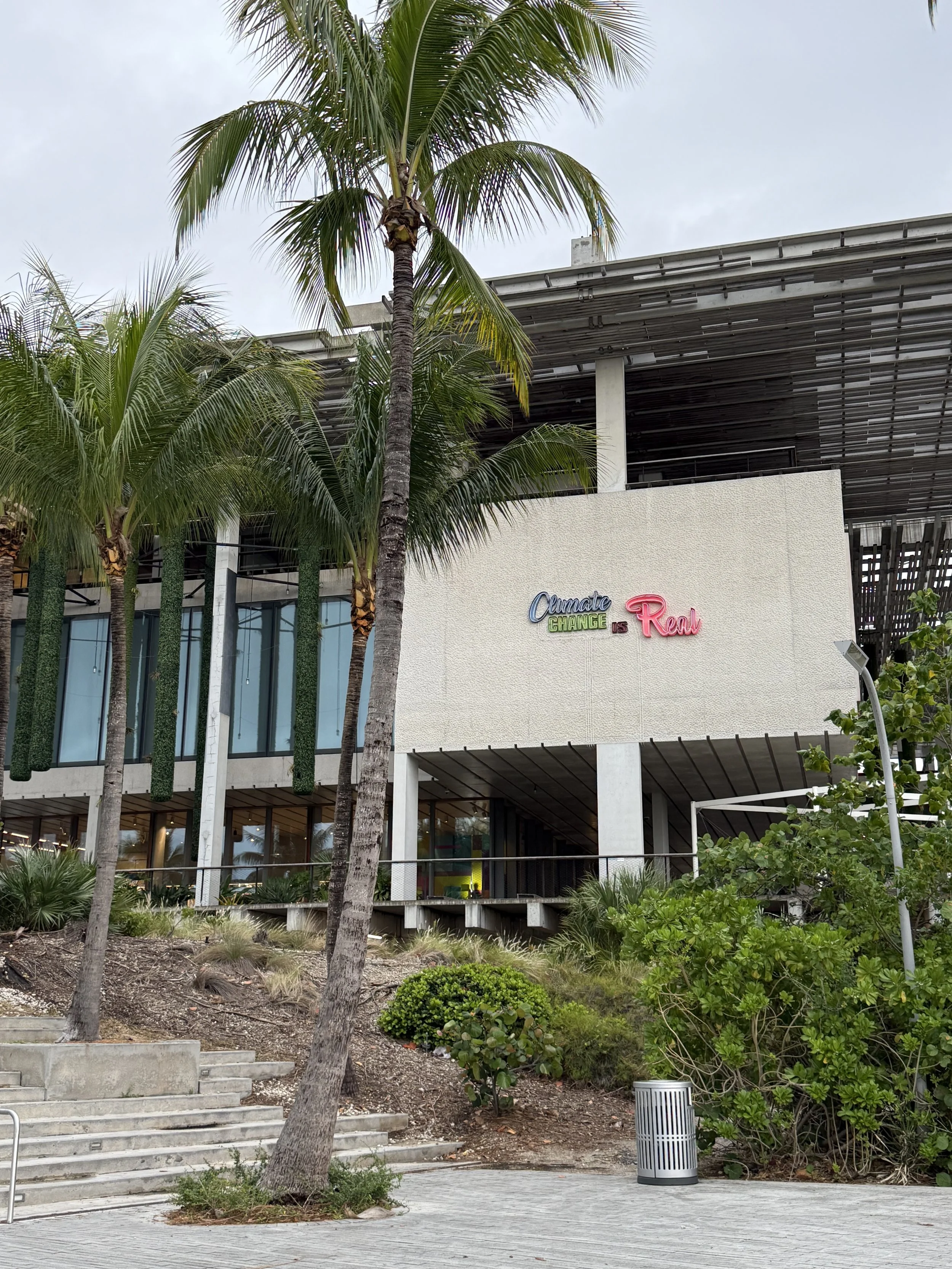
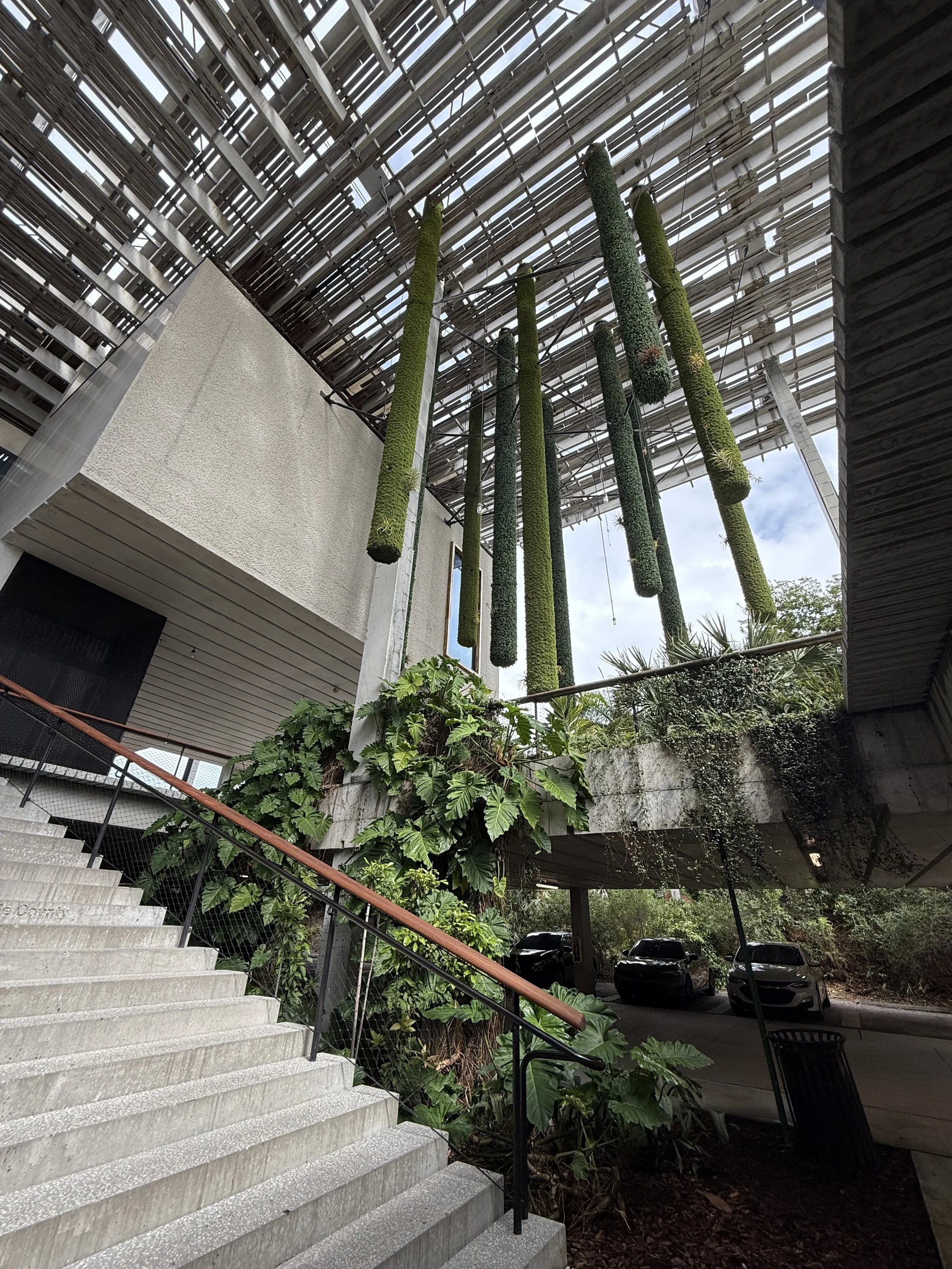
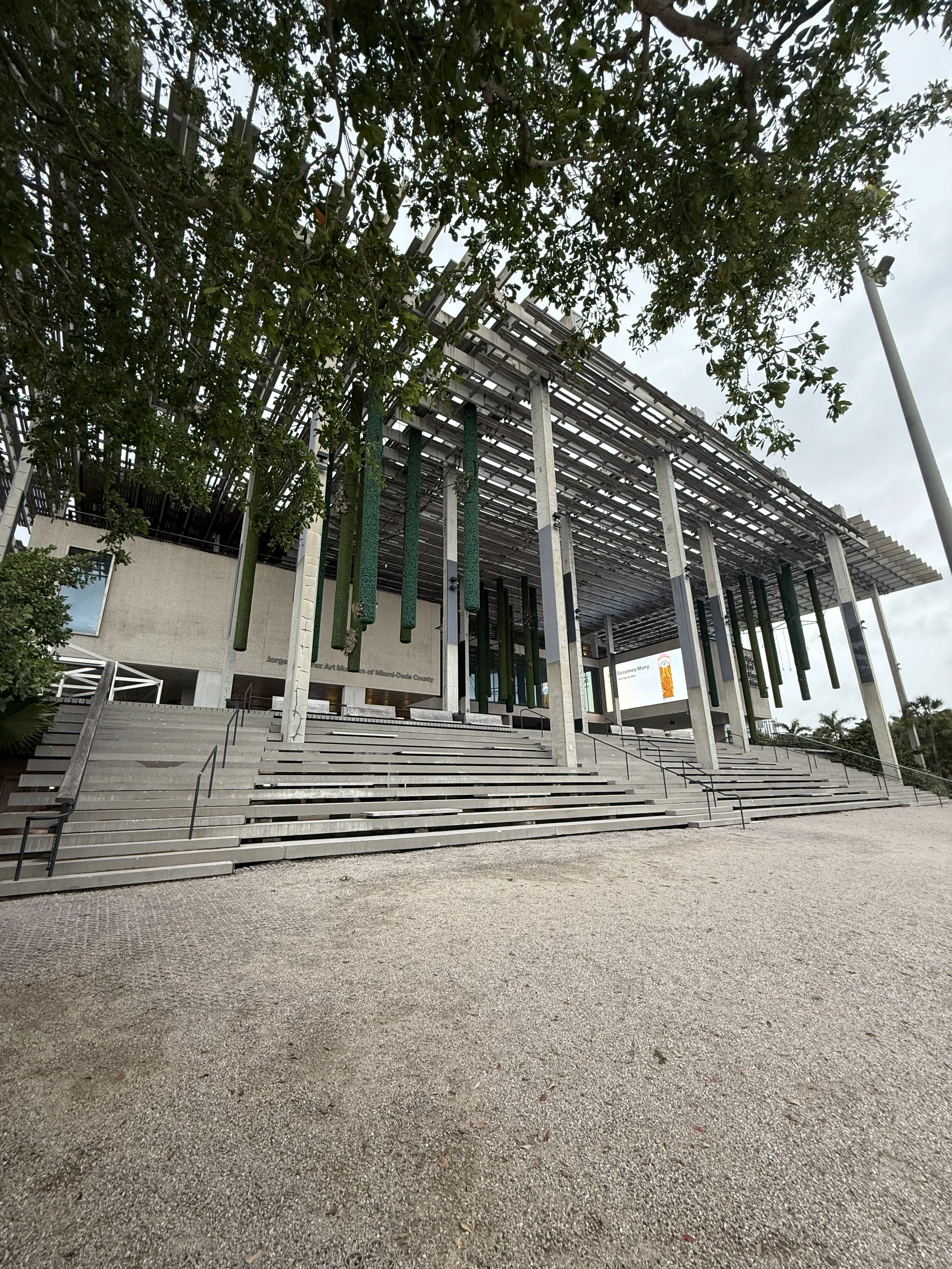
Funded by Miami-Dade County’s Building Better Communities program, the Pritzker Prize-winning architects Herzog & de Meuron designed the sustainable bespoke building to house the museum. Opening in 2013, the museum “was renamed the Jorge M. Pérez Art Museum of Miami-Dade County.” The PAMM website also has a statement addressing and promoting Diversity, Equity, Accessibility, and Inclusion. PAMM’s vision affirms the commitment “to international modern and contemporary art” by “presenting art from the U.S. Latino experience, the African diaspora, Latin America, and the Caribbean.” PAMM showcases “the diversity of 20th- and 21st-century artists” with programming that seeks “to educate and ensure that all people can participate in a conversation that shares art at its center.”
Partnerships
The PAMM began as a partnership between the 501(c)3 non-profit Center for the Fine Arts (CFA) and Miami-Dade County in 1984. Miami-Dade County’s Building Better Communities program funded the construction of the 2013 building located at Museum Park alongside Biscayne Bay. The PAMM also receives funding from the Knight Foundation. Specific exhibitions receive funding from both individual and corporate sponsors.
José Parlá: Homecoming is “organized by Maritza M. Lacayo, Associate Curator, with the support of Fabiana A. Sotillo, Curatorial Assistant. This exhibition is presented by Citi with supporting sponsorship from Sarah Arison and Goya Foods.” Gyula Kosice: Intergalactic “has been conceived and organized by the Museo de Arte Latinoamericano de Buenos Aires (Malba) and the Museum of Fine Arts, Houston (MFAH).” Credit is attributed to the co-curators and their home institutions as well as noting that the PAMM “presentation is made possible with lead individual support from Patricia and William Kleh.”
Accreditation Status
Publications & Library Connections
Programs
As stated on PAMM’s website, the Peréz Art Museum Miami is accredited by the American Alliance of Museums (AAM). The AAM reaccredited PAMM in 2021. In this publication, the AAM notes that “to earn accreditation, a museum submits a self-study questionnaire and key operational documents for evaluation, then undergoes a site visit by a two-person team of peer reviewers which produces a report” for the commission.
The only publications I could find were designed to accompany and published in conjunction with exhibitions shown at the PAMM. During my visit, the PAMM Gift Shop was offering a sale of PAMM publications with “buy one, get one 50% off.” No other library affiliations were mentioned. The PAMM does not feature its own library.
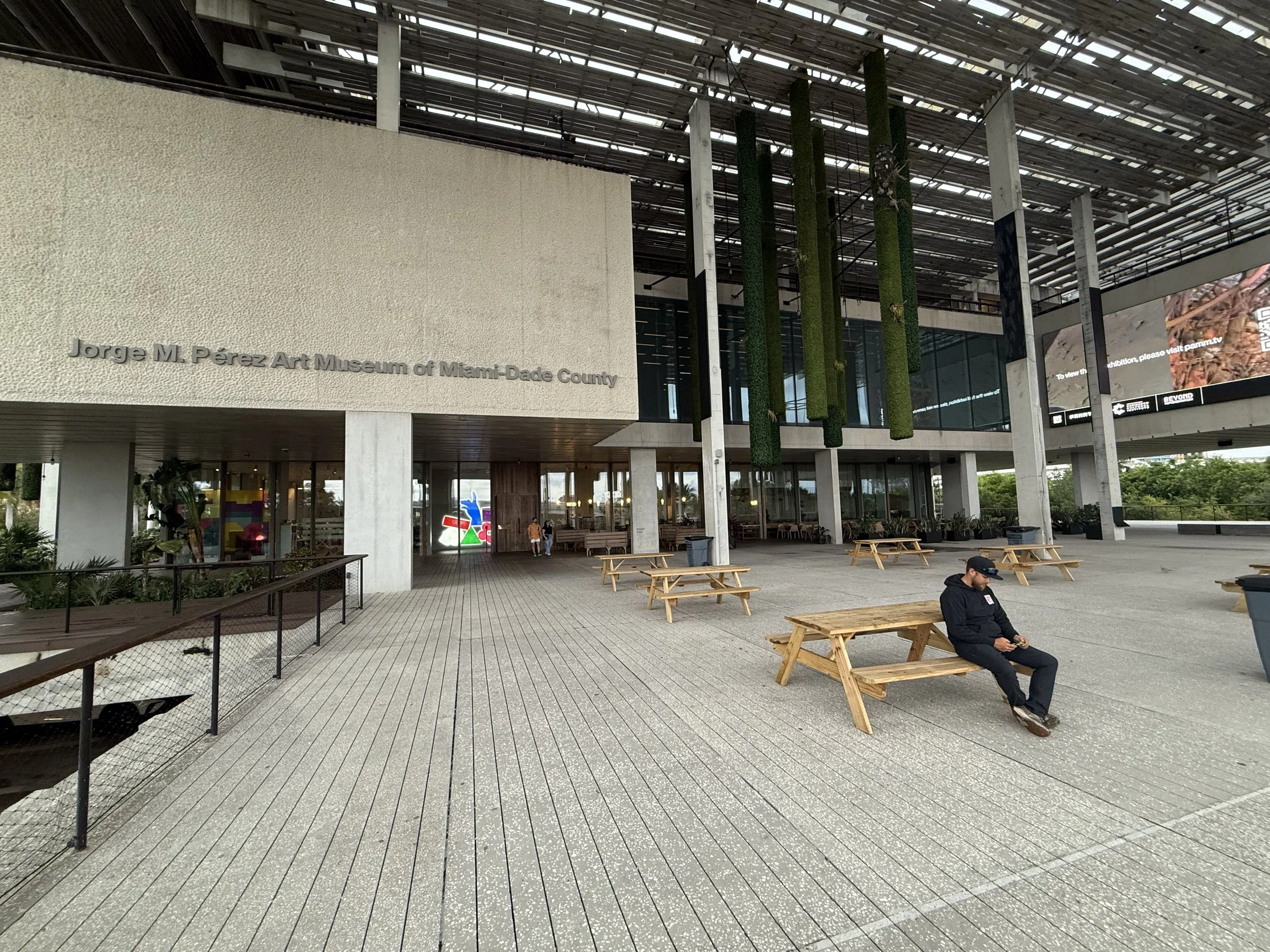
The PAMM hosts a variety of events, including movie screenings, music performances, tours, and free Second Saturdays. The PAMMPort offeres both QR Codes paired with artwork and a paper activity pamphlet, Let’s Go on an ARTventure! featuring activities for the exhibitions and galleries. The PAMM features extensive outdoor seating, with picnic benches for visitors, space for Verde restaurant and bistro seating, and seating overlooking Biscayne Bay. This seating can be utilized for performances and film screenings, such as the upcoming Pride event on June 12th for “a sing-along screening of “Wicked” (2024), hosted by drag performers Tiffany Fantasia and Kat Wilderness, on a 60-foot floating screen courtesy of Ballyhoo Media.”
Experience
I visited the Pérez Art Museum on Monday May 12, 2025. I drove to the mainland from Key West and opted to stay overnight in the Wynwood Arts District of Miami. It was a relaxing visit to the PAMM, especially since I did not have to worry about driving over three hours back to Key West that evening. We checked into our hotel, got settled, and then went to the PAMM. We focused on exploring the exhibitions, so we were unable to dine at Verde. The bistro closes a half hour before the museum.
I visited the PAMM with my partner James, who is a professional charter fisherman. I am grateful that he enjoys traveling and regularly visiting museums, libraries, and art exhibits with me. He was intrigued by the Gyula Kosice: Intergalactic exhibition, especially when considered in conjunction with historical and political events of the time.
PAMM admission costs $18 (the same amount as the flat fee parking), yet PAMM ensures that there are multiple options and avenues for visitors to access applicable discounted rates. These discounted rates apply to students and age-based groups such as children, youths, and seniors. Free admission is available to public service members such as Florida educators, active military, veterans, healthcare professionals, and first responders. Disabled visitors can also utilize free admission. I thought it was immensely considerate and inclusive to extend the free admission to caregivers as well. Often, admission costs can be prohibitive to individuals that are on a fixed or limited income. By waiving admission for vulnerable individuals and their caregivers, more visitors from various demographics can access and enjoy the PAMM. Visitors can focus on the exhibitions rather than costs. Free admission is also available to PAMM Members. Individual membership starts at $80 for one year. Membership options include an individual membership with a two-year duration at $150, a dual membership for one year at $110, and extending as far as the Visionary level at $25,000 per year. Multiple donation tiers ensure that various demographics can donate and support the PAMM at a financial level that is comfortable to them.
When paying for my tickets, I mentioned the visit was for my graduate class at the University of South Florida. The staff applied the student discount to not only my ticket, but also my partner’s ticket.
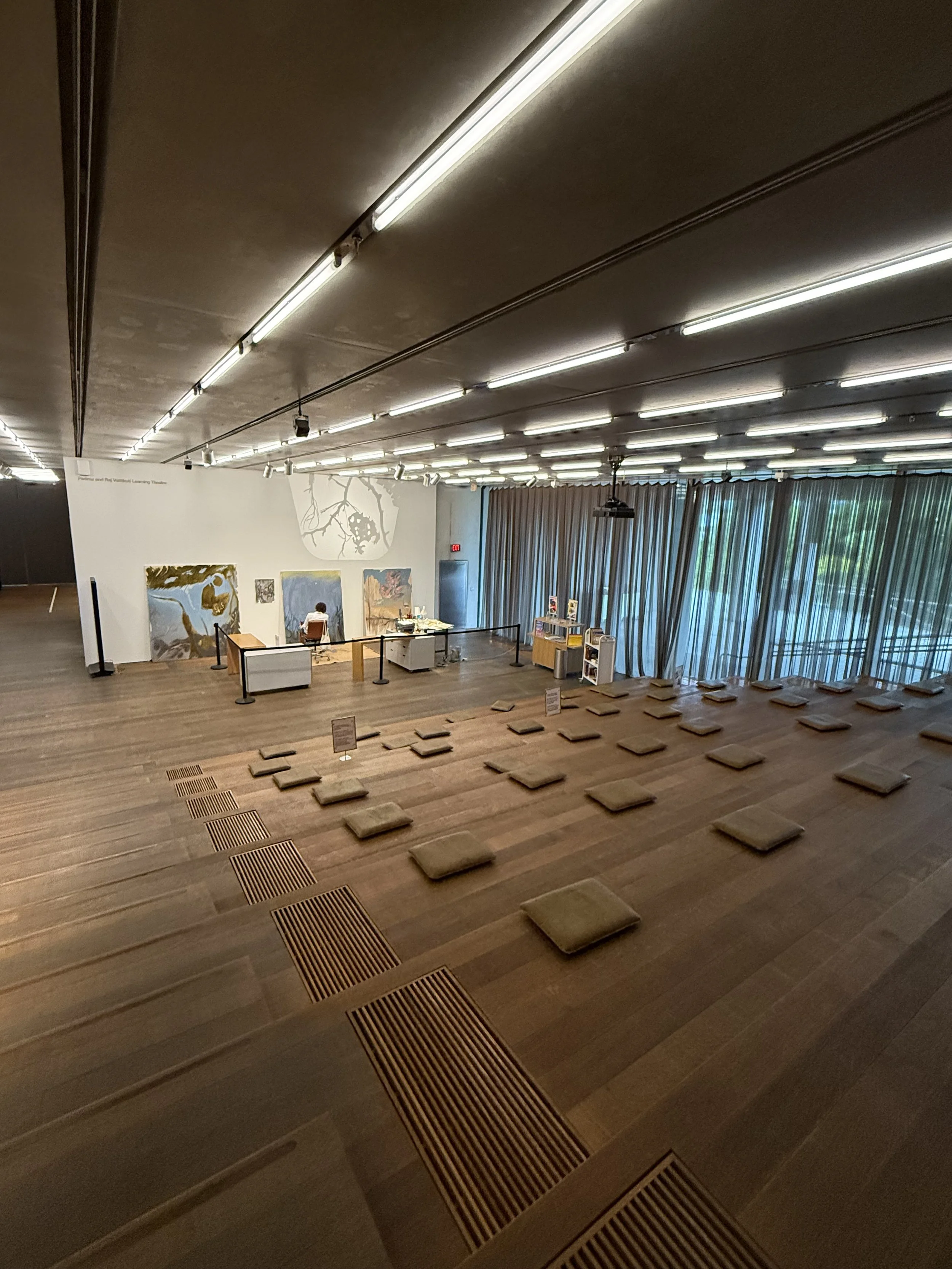
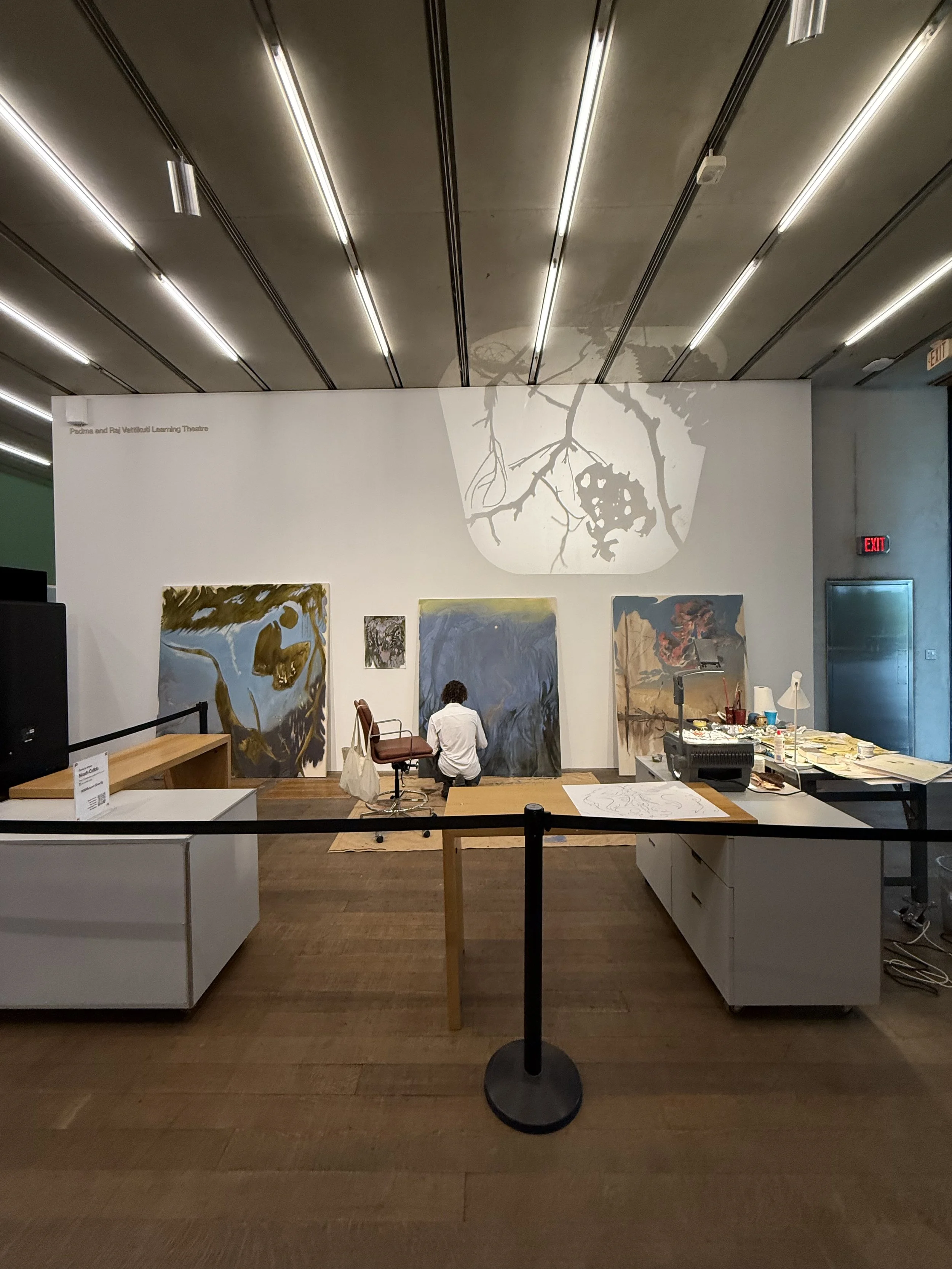
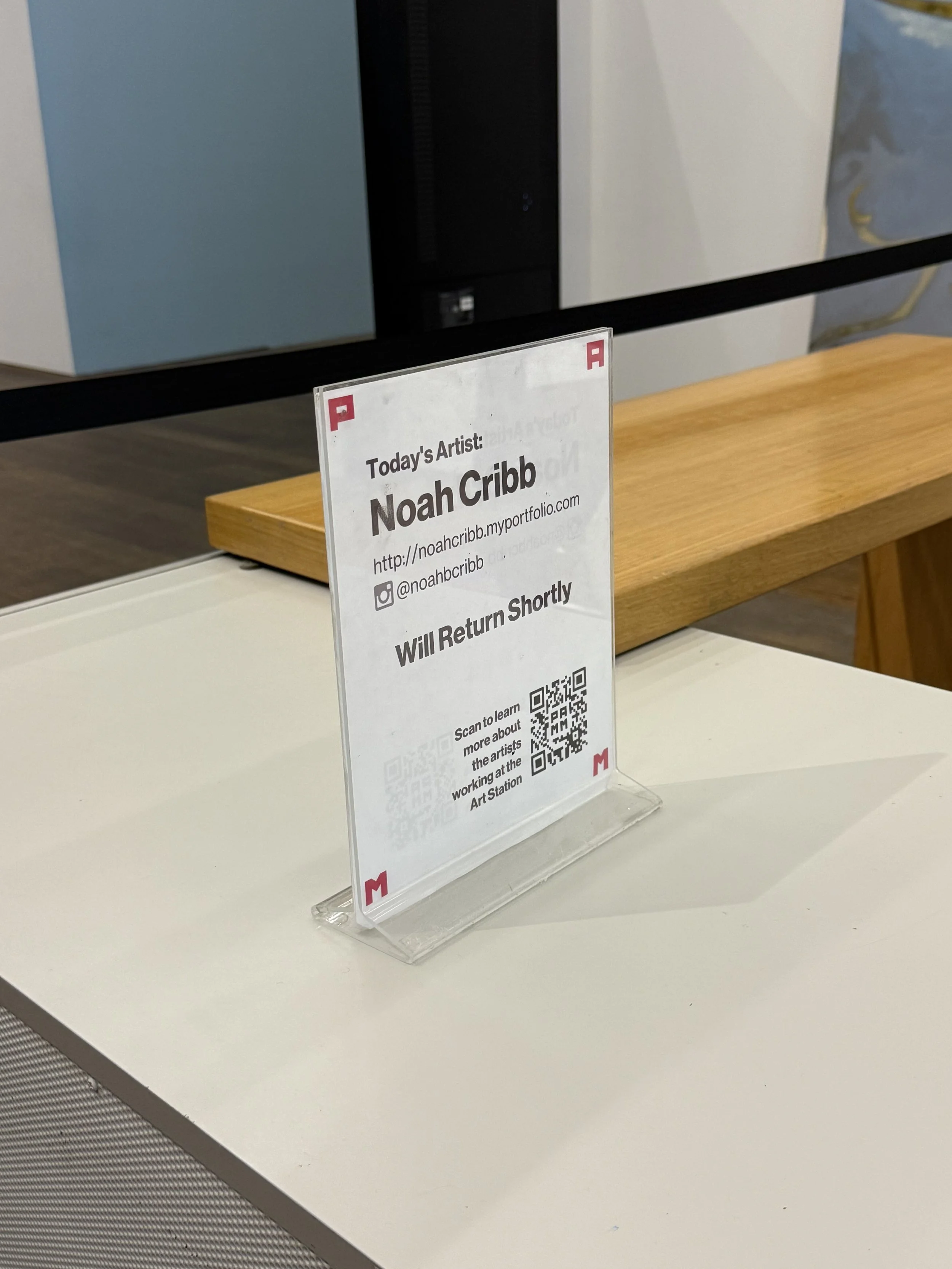
I was so excited when I encountered the PAMM’s Art Station, complete with tiered seating. The working artist was Noah Cribb. Although the sign said the artist “will return shortly,” Cribb was currently working and painting. Cribb’s website and Instagram were displayed, as well as a QR Code for the Art Station program. The tiered seating, with small pillows, offers a great view for visitors and can accommodate a medium sized audience. The Art Station is located in the Padma and Raj Vattikuti Learning Theatre, indicating the option for mixed use and multiple classes on offer.
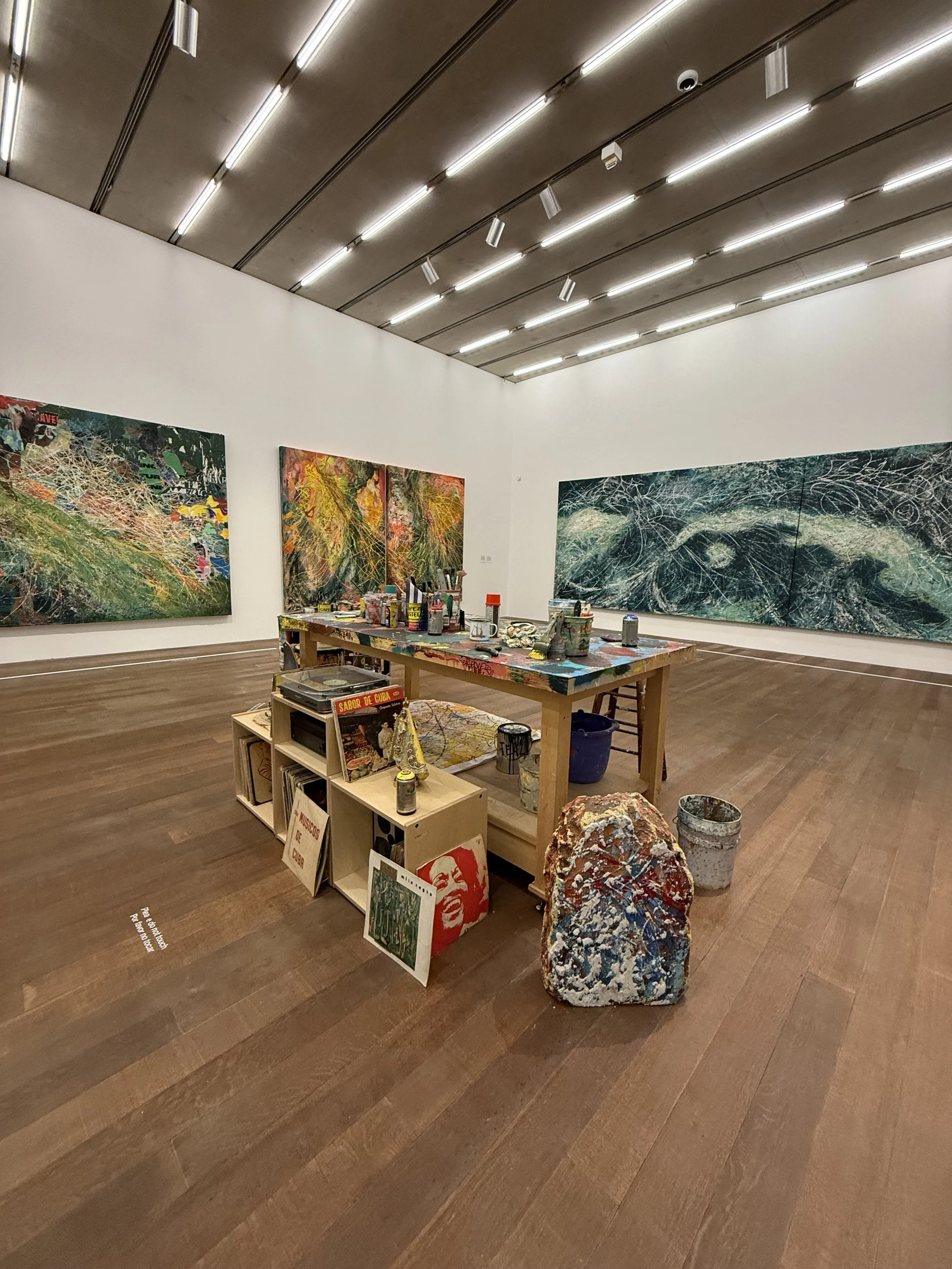
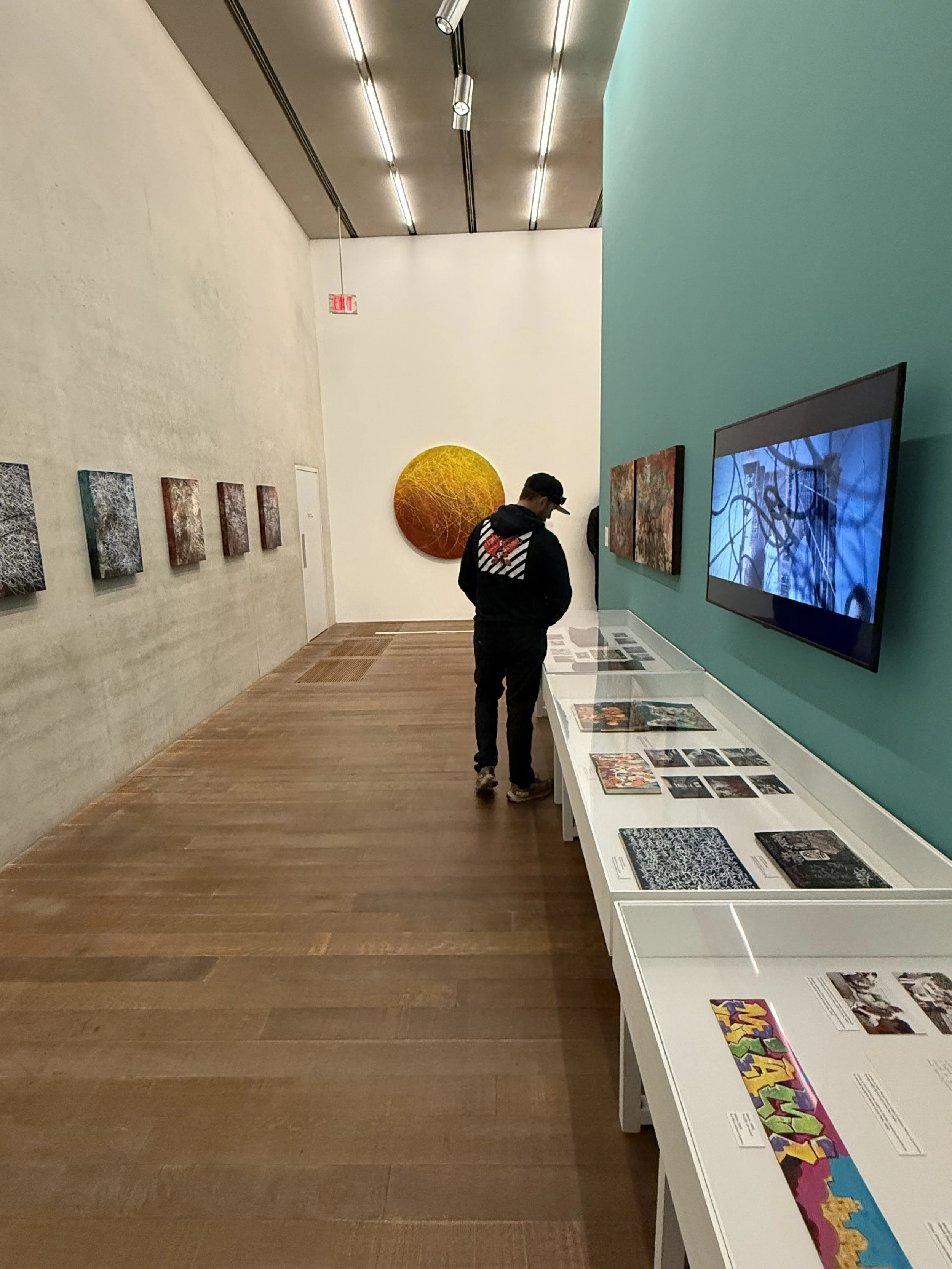
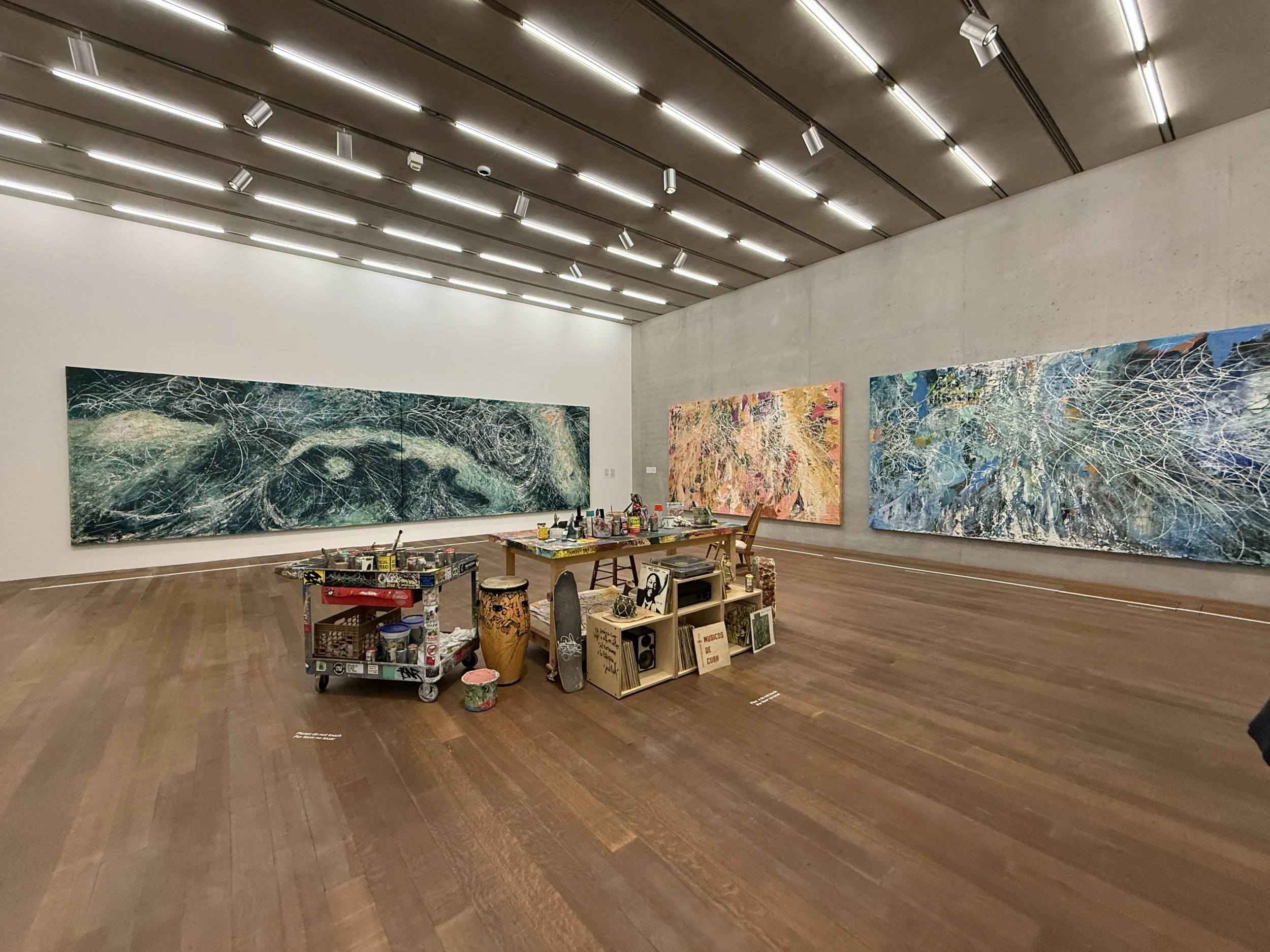
José Parlá: Homecoming is nestled down a narrow hallway, featuring decades of Parlá’s sketchbooks, opening into a large gallery. Parlá painted on-site at the PAMM and his set up, including paints, paintbrushes, and creature comforts, is on display through July 6, 2025. Homecoming is Parlá’s “first solo museum exhibition in his hometown” and includes a site-specific mural. One of my favorite aspects of this exhibition is Parlá’s record collection. The record player included in Parlá’s working studio plays records from his personal collection. In an otherwise quiet environment, the addition of the artist’s personal tunes is a vibrant and tangible connection between viewer and artist. As throughout the PAMM, wall texts are in both English and Spanish. The floor text is also in English and Spanish.
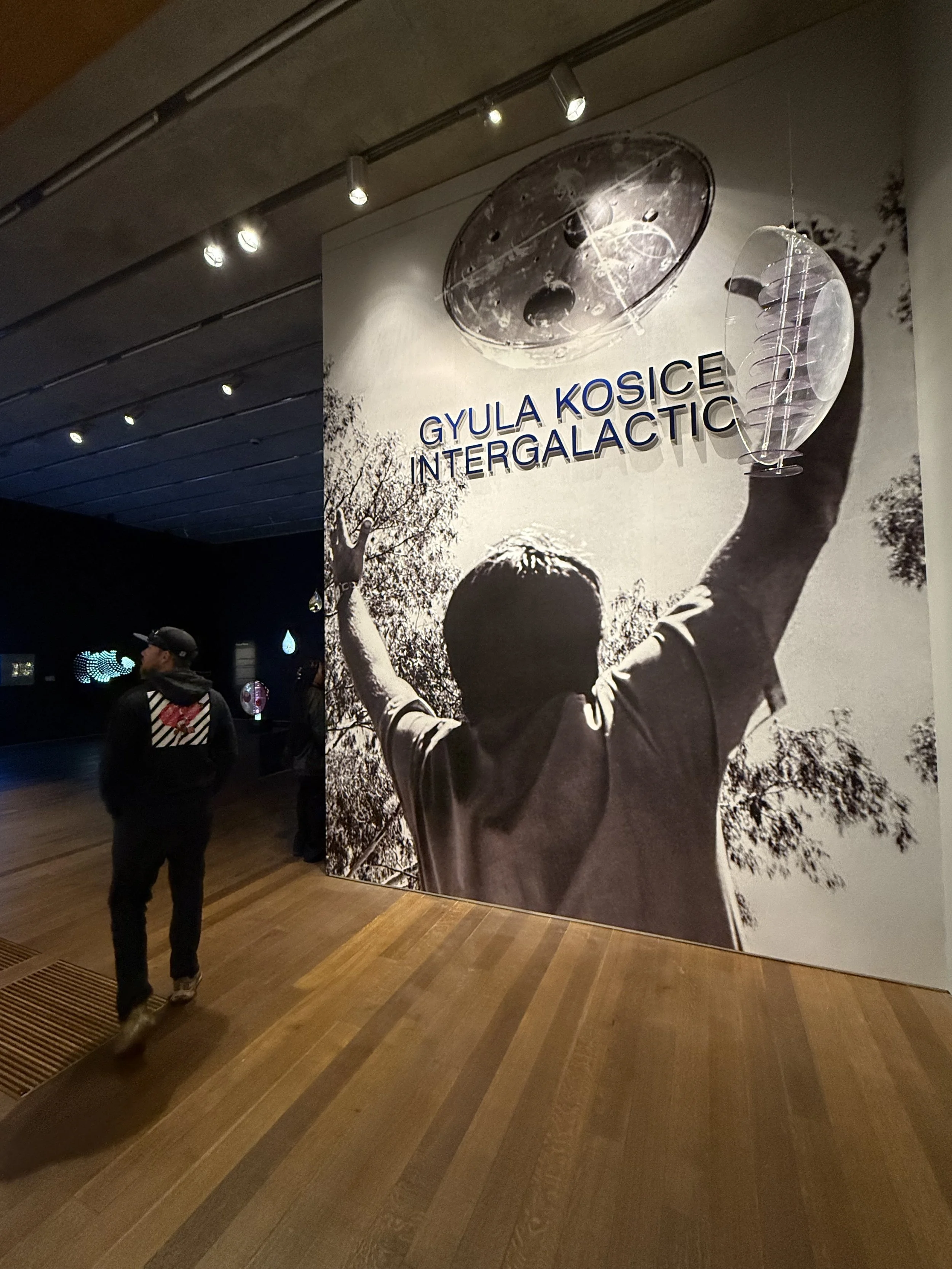
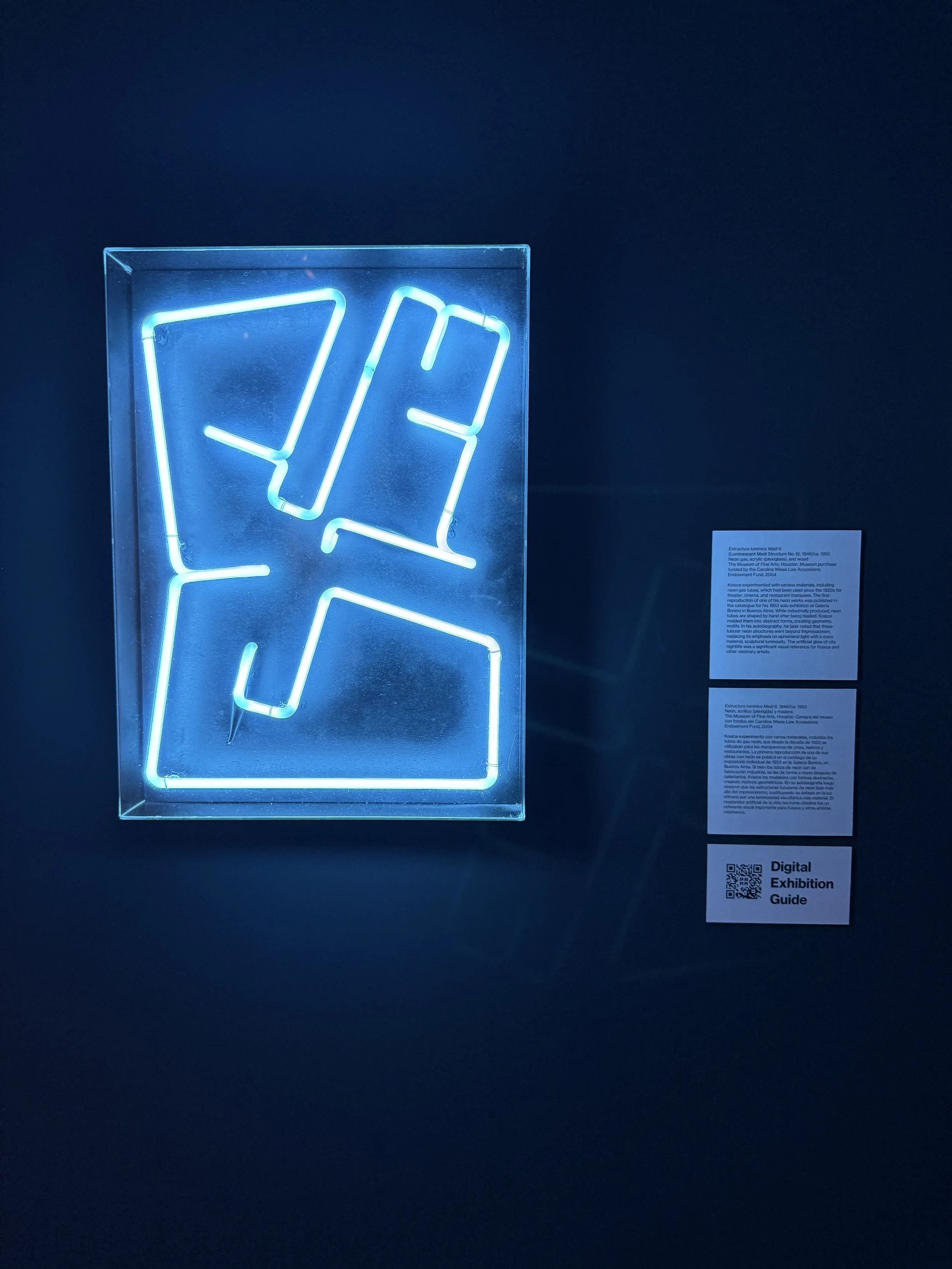
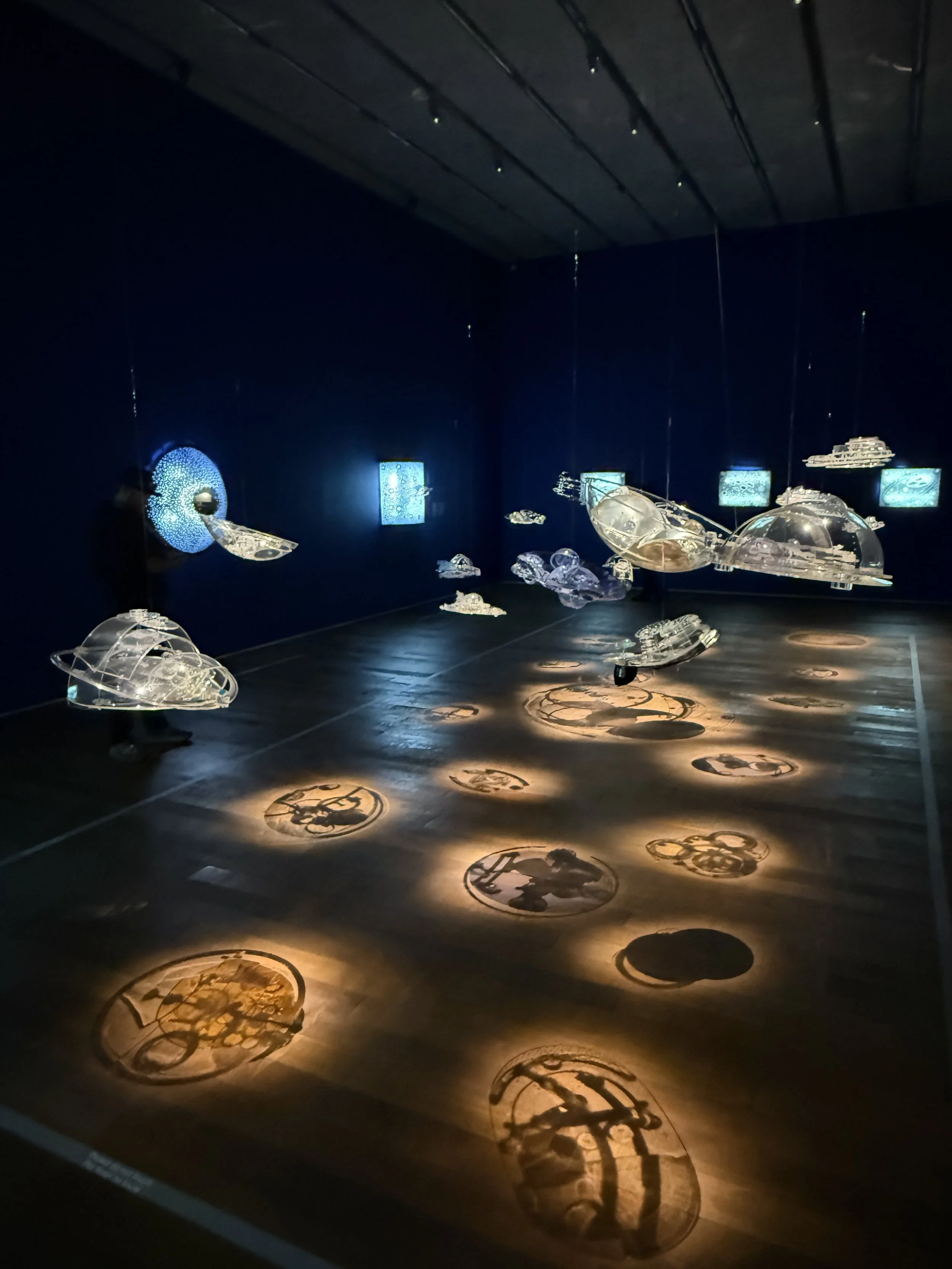
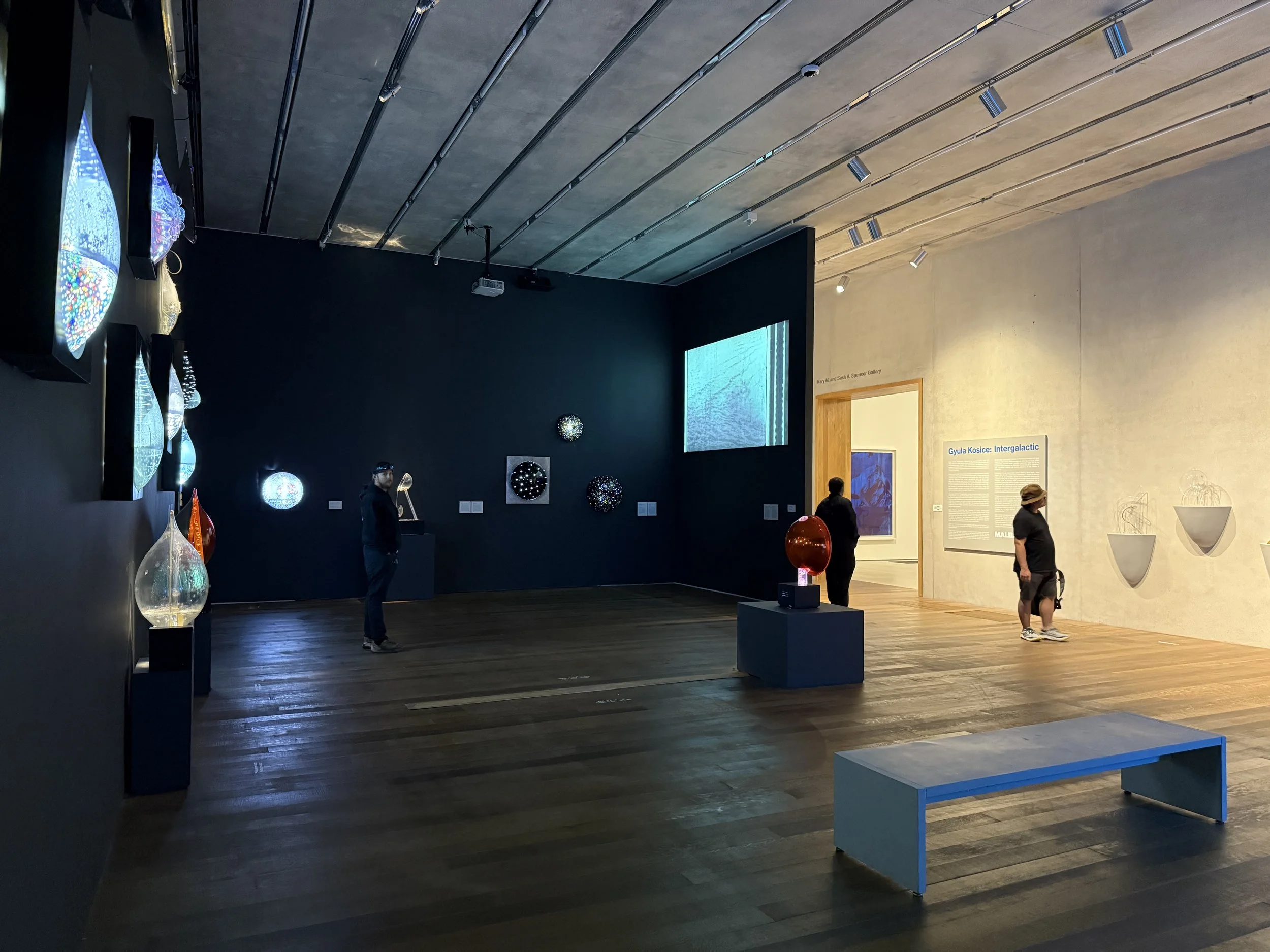
James and I both enjoyed the Gyula Kosice: Intergalactic exhibition. It is on view through September 7, 2025. The exhibition is timed with the hundredth anniversary of Kosice’s birth in 1924. I appreciated how PAMM painted the walls black and dimmed overhead track lights to ensure Kosice’s neon light-based art works, backlit water-based art works, and film were easily viewed and appreciated by visitors.
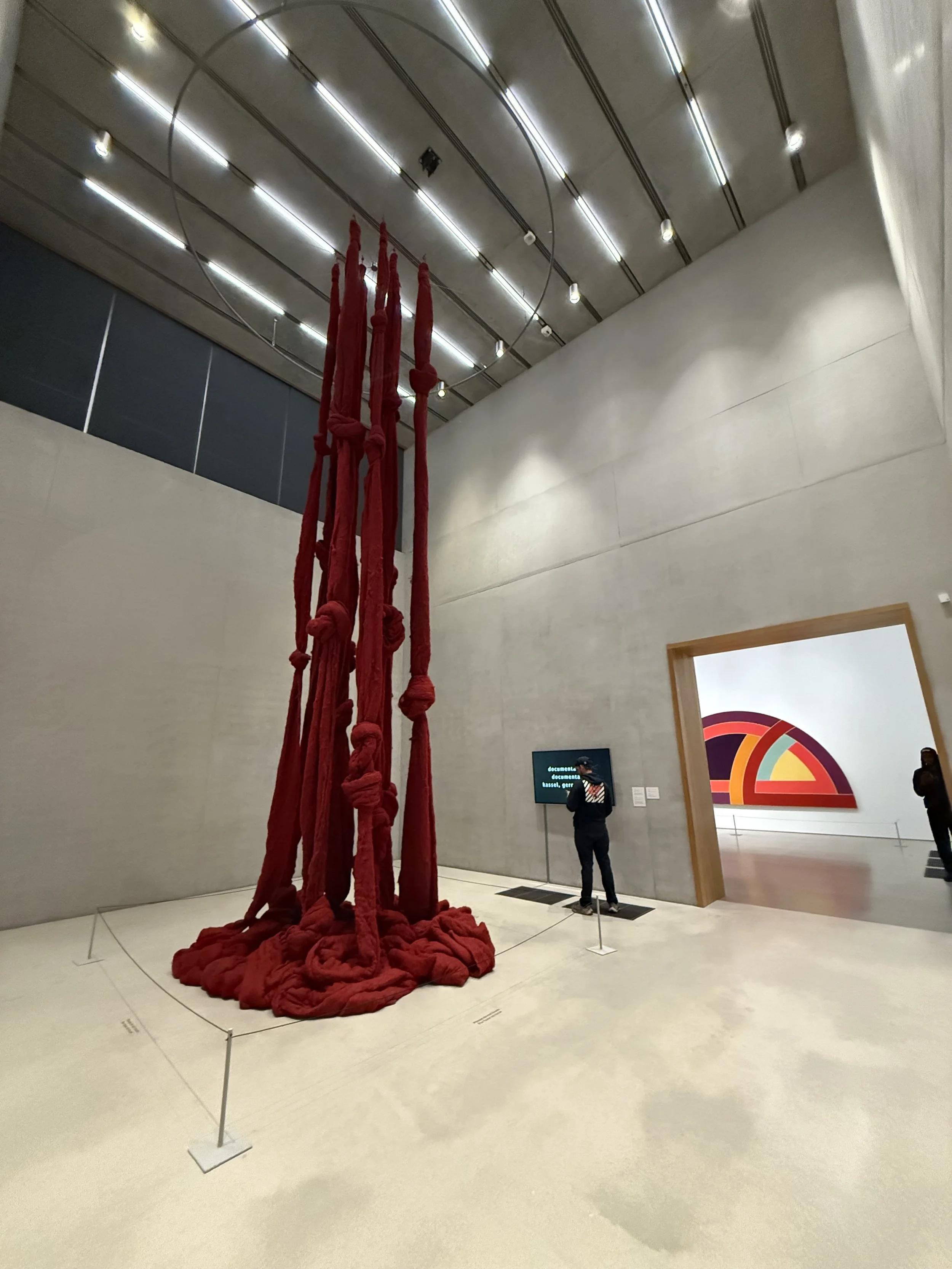
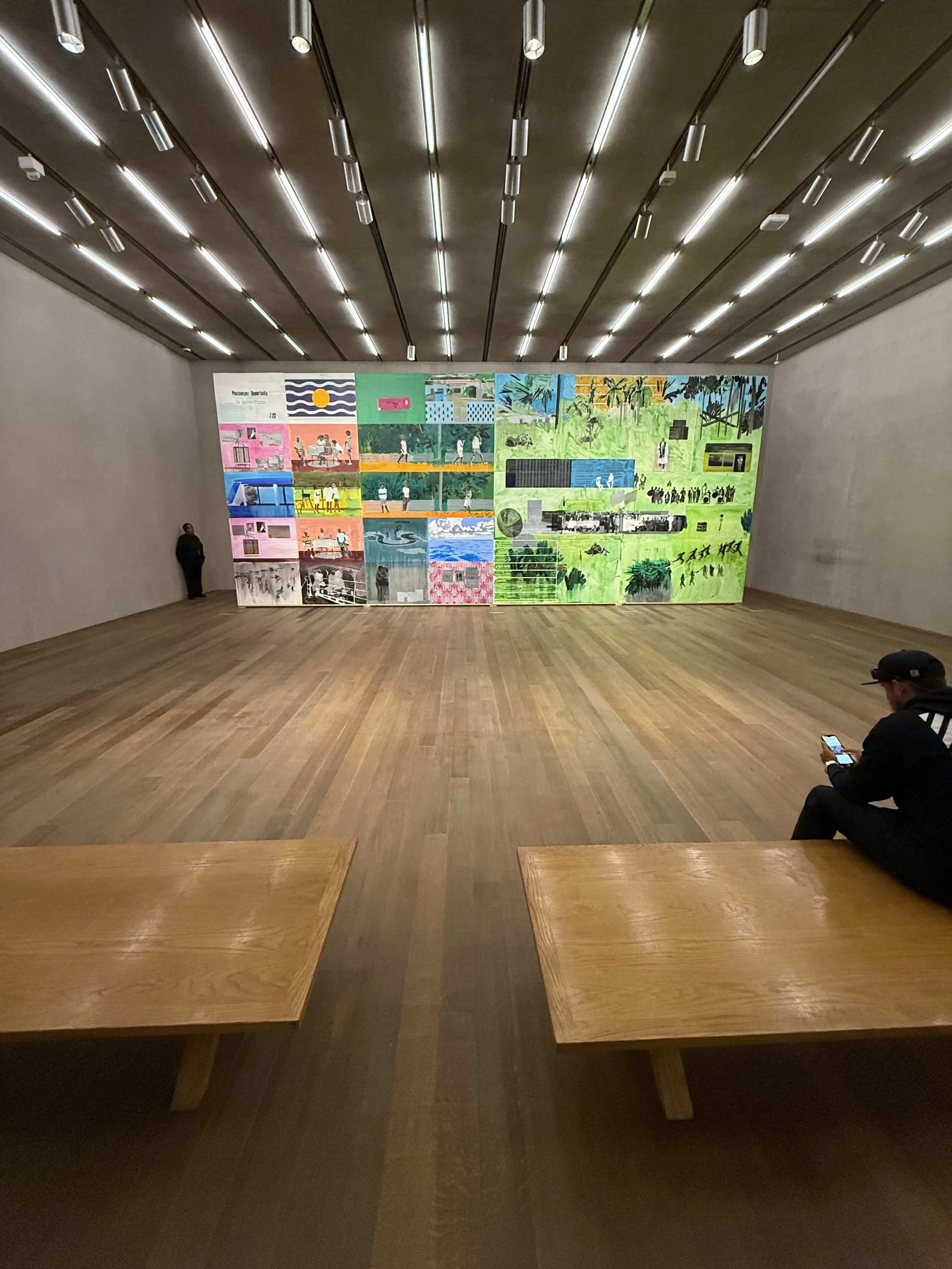
I enjoyed the curatorial decision to place two different works of art in their own individual rooms. Both pieces dominate their respective spaces and would otherwise overwhelm other pieces, had they been displayed in tandem. Hurvin Anderson’s Passenger Opportunity is a massive sixteen-panel painting on display through August 17, 2025 for Anderson’s first solo show at the PAMM. The gallery is well-lit, with two large benches available for viewers to recline and devote an extended period of time to Passenger Opportunity’s nuances and details. I thoroughly enjoyed seeing how the PAMM chose to display the panels as one large supported piece. Cecilia Vicuña’s Quipu Gut is on view through August 9, 2026. I appreciated that the imposing textile installation is paired with a video chronicling its creation from 2017. PAMM offers a digital exhibition guide for Quipu Gut here, with sections including the Introduction, More about Cecilia Vicuña and Quipus, and a link to a visitor Feedback form.
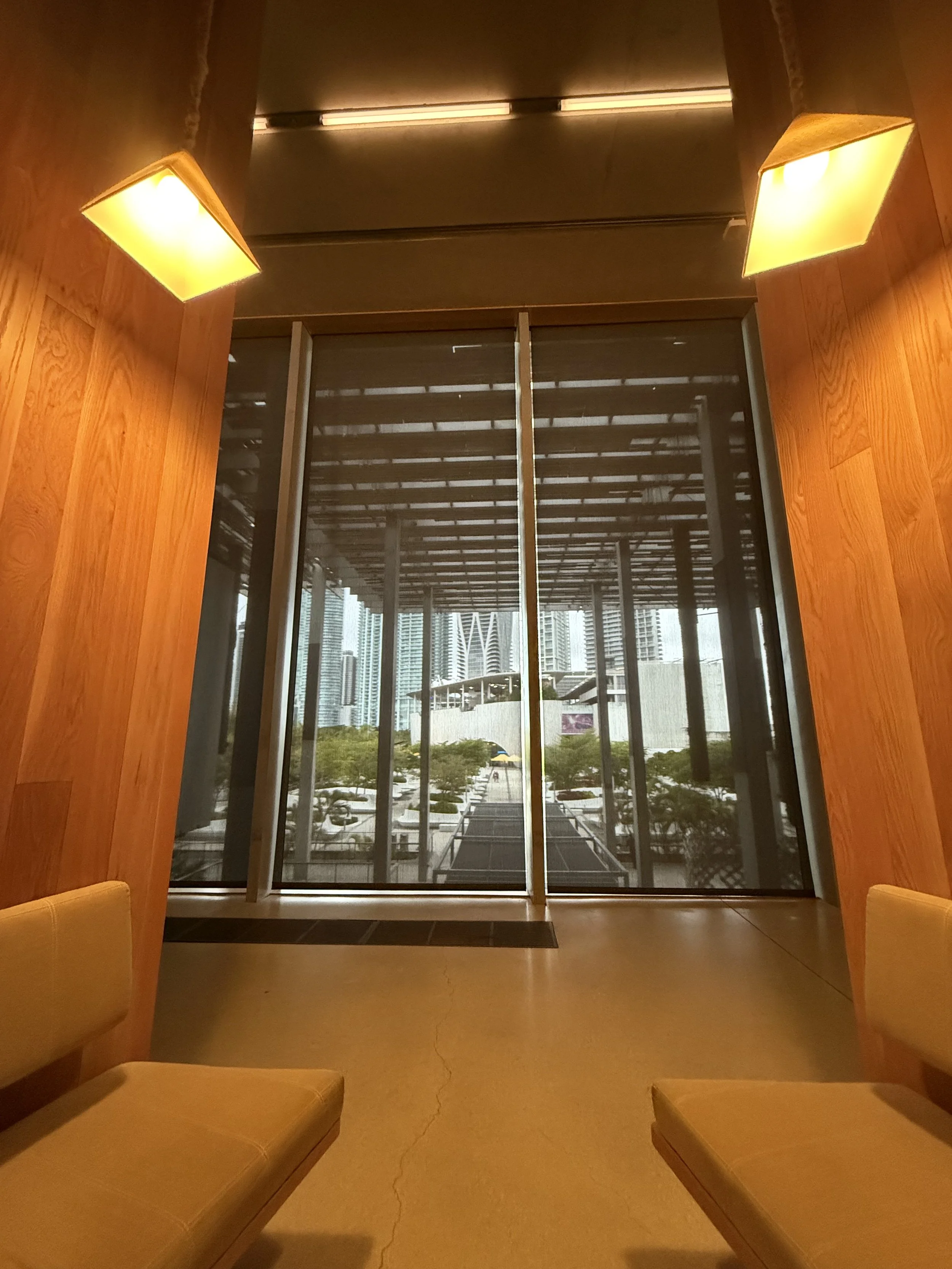
Throughout the PAMM, there is seating available to view and contemplate artworks on display in the current exhibitions and permanent collections. I was struck by the availability of two nook booths nestled on the second floor. These booths overlook the front entrance, shared pavilion, the Phillip and Patricia Frost Museum of Science, and the high rises of Miami. The windows are protected by interior shades, thus adding to the ambiance of the booths as well as mitigating any damage or deterioration that could be caused by sun and light exposure.
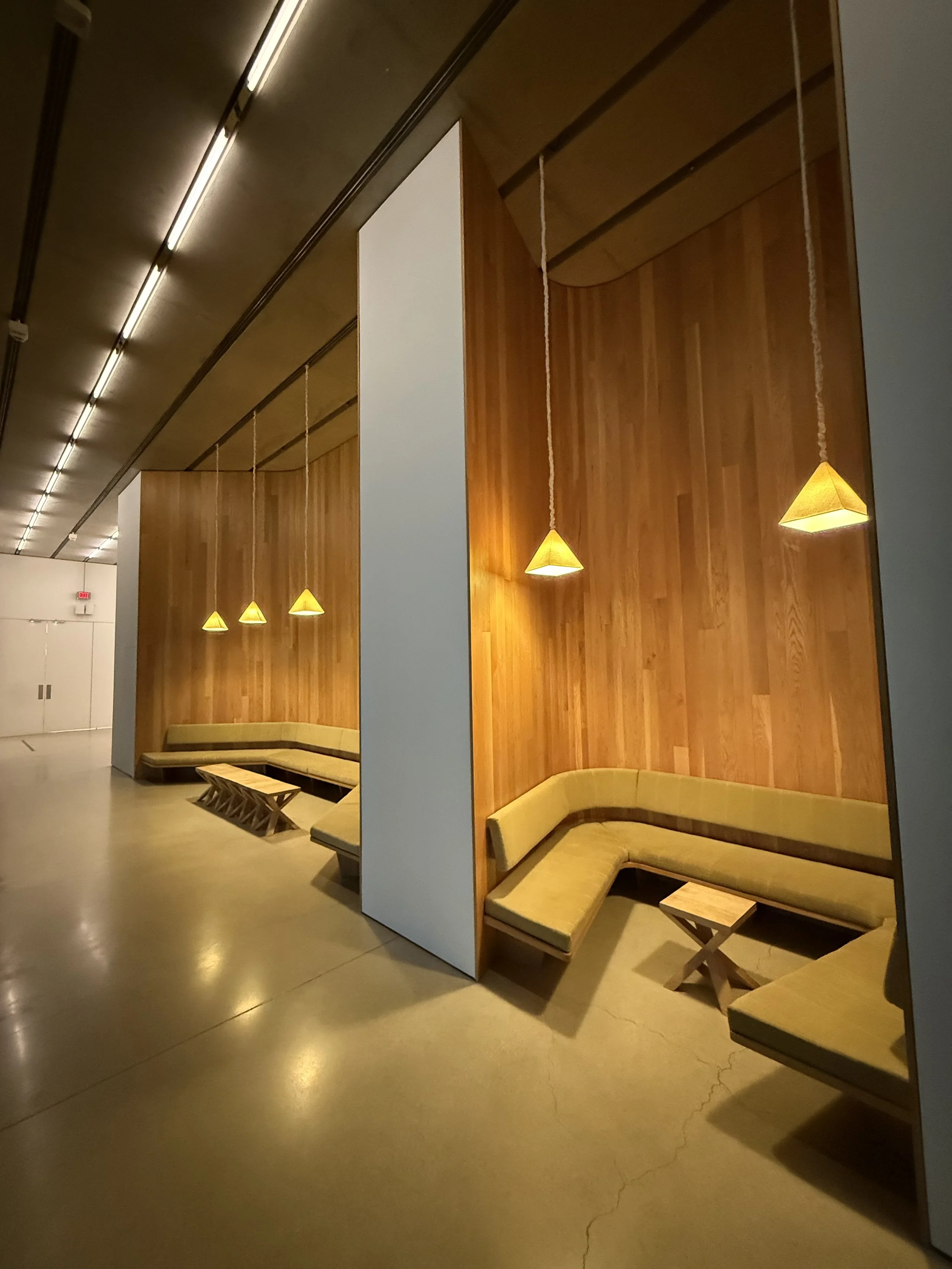
The most unique aspect of these booths is that they are focused on the view from the PAMM building (a work of art and architecture in its own right), its surroundings, and the Frost Museum. The booths are not facing an object of contemporary fine art, but instead look upon the PAMM’s environment, firmly anchoring the institution in its physical space in the world and in Miami. This also acts as a safe haven if a viewer is looking for a reprieve from visual fatigue. Visiting museums is a very enjoyable activity, but can at times be overwhelming or exhausting.
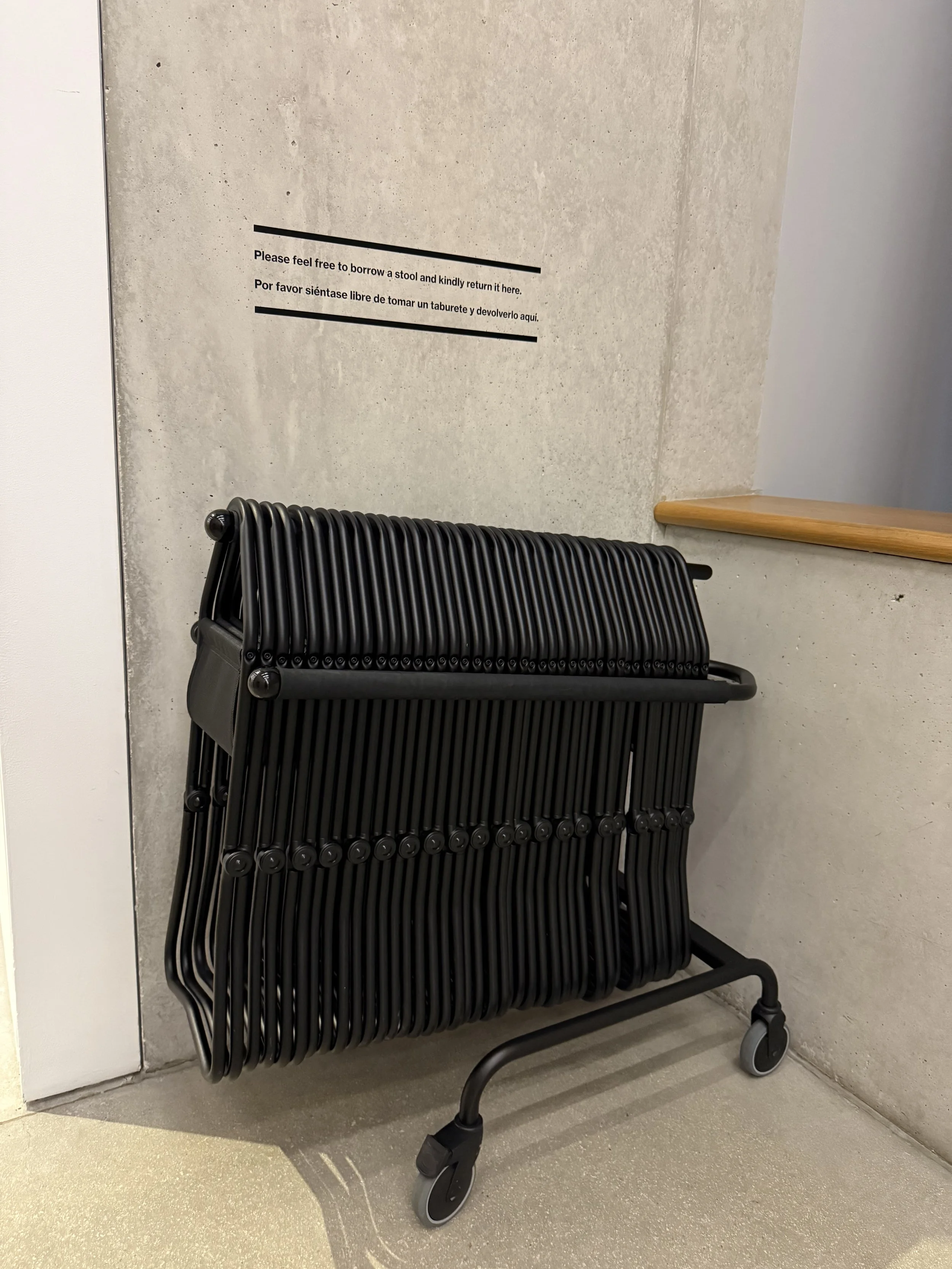
I was also thrilled to see folding stools available for personal use. These provide impromptu seating options for patrons as needed. These stools are also a wonderful tool for student and fine artists to sit while studying art or sketching master studies. Stools like these perform dual roles, as both accommodating access as well as providing comfortable learning opportunities. I actively look for these types of stools or moveable seating at every museum I visit and I’m over the moon whenever they are provided. The signage for the stools is in both English and Spanish.
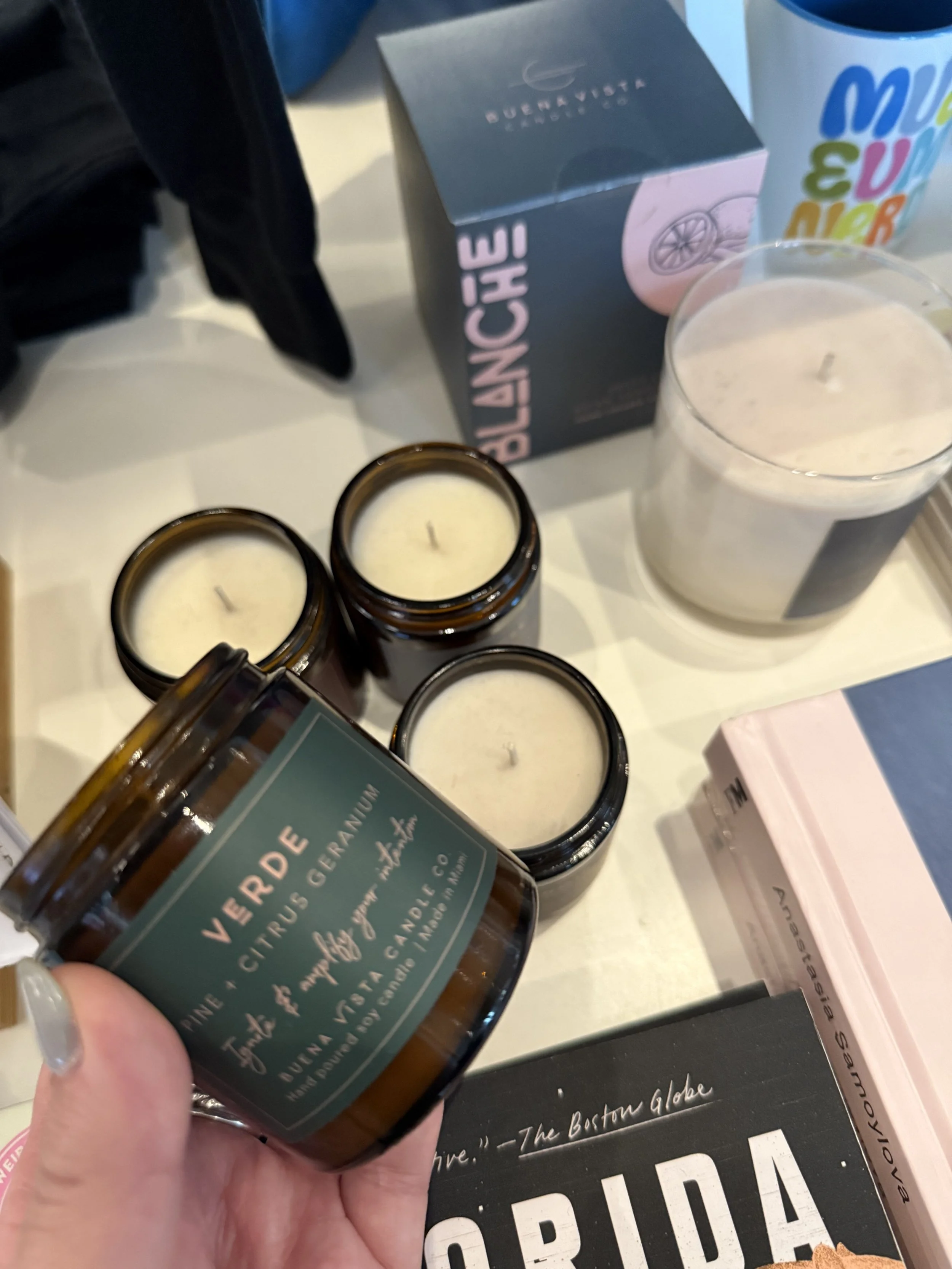
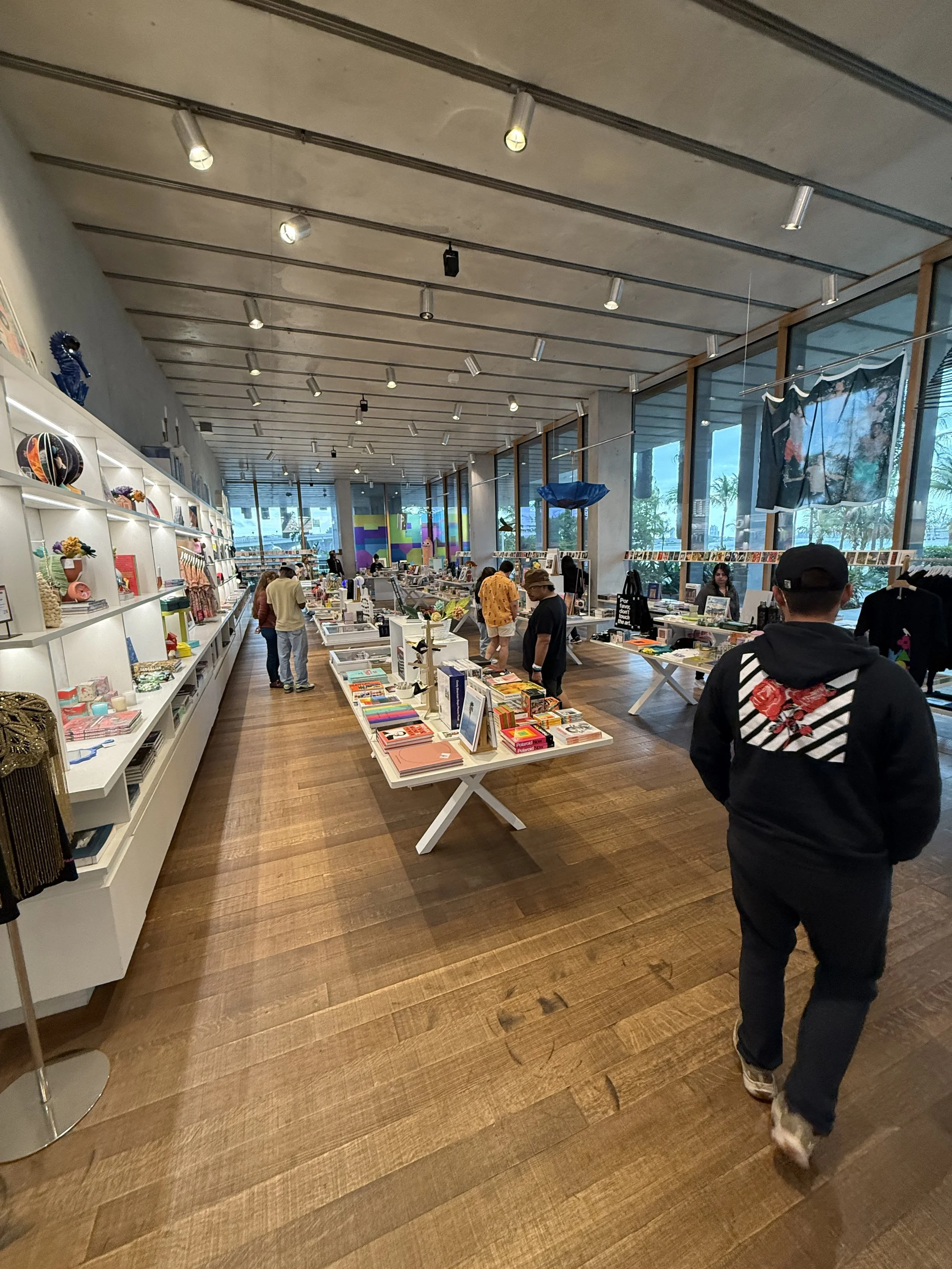
The PAMM Gift Shop adjoins the museum’s entrance and Visitor Services Desk. The Gift Shop also matches its hours to the museum’s opening hours. The Gift Shop features a wide array of PAMM publications; fine art books; art-themed gifts, jewelry, journals, mugs, socks; items by local artists and artisans; PAMM shirts and sweatshirts; and more all for sale. I even spotted my friend Jeannine Escobar’s candle line, Buena Vista Candle Co., available! Her studio is based in Miami. This is a prime example of the PAMM Gift Shop highlighting and promoting local artists and artisans.
-
References
American Alliance of Museums. (2021, July 27). AAM announces latest accreditation awards: 25 museums receive this high honor. https://www.aam-us.org/2021/07/27/aam-announces-latest-accreditation-awards-25-museums-receive-this-high-honor/
Bayfront Park Miami. (n.d.). Welcome to Maurice A. Ferré Park. https://bayfrontparkmiami.com/maurice-a-ferre-park/
Buena Vista Candle Co. (n.d.). About. https://buenavistacandles.com/pages/about
Pérez Art Museum Miami. (n.d.). Pérez Art Museum Miami: Plan your visit. https://www.pamm.org